
Your baseball or softball season is over—so do you just walk away until next spring? That would be a mistake. Successful baseball and softball field maintenance means always looking ahead, even into the off-season, and having a plan to protect your infield for next year.
The late summer and fall months, typically drier across much of the U.S., are the perfect time to prepare your infield dirt for the winter so it’s game-ready in early spring. Here are five essential tips to put your skinned infield areas to bed the right way.
1. Remove Lips Along Turf Edges
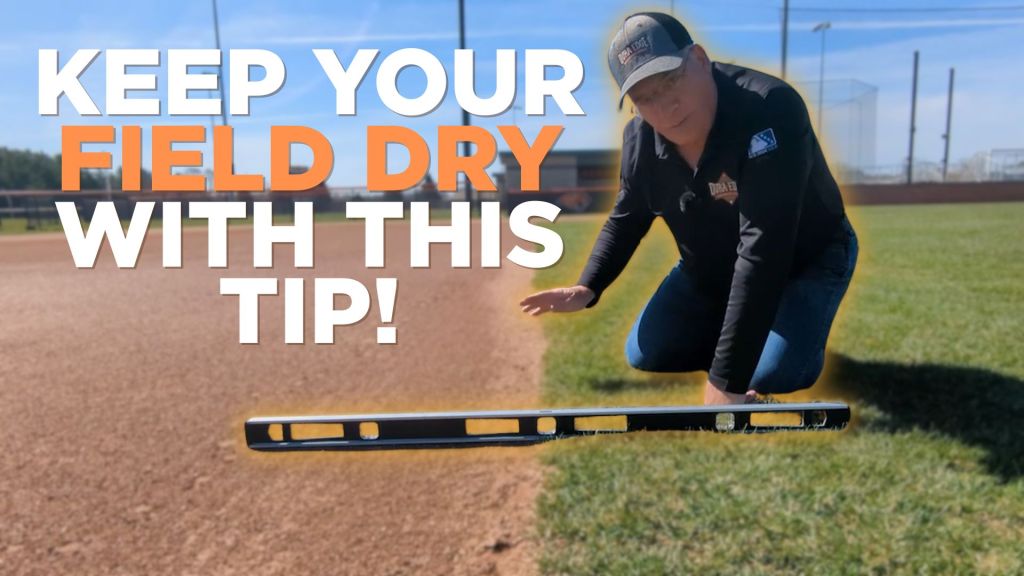
If your field has lip buildup between the grass and infield skin, fall is the time to fix it. Aggressive lips may need to be flushed with water, or, in severe cases, cut out with a sod cutter. After removing turf, loosen the soil, regrade to the proper level, and sod back in. This eliminates “dams” that prevent water from draining off the infield skin—one of the most important steps for safe play and effective infield drainage.
2. Shrink Over-Expanded Infield Skin
Has your infield or baselines expanded too far into the turf? You may be maintaining more skinned area than necessary. Use sod to bring edges back in slightly tighter than your target dimensions. This gives you room for future trimming and keeps your infield layout within spec. This step is often paired with lip removal for maximum benefit.
3. Protect Topdressing From Blowing Into Turf
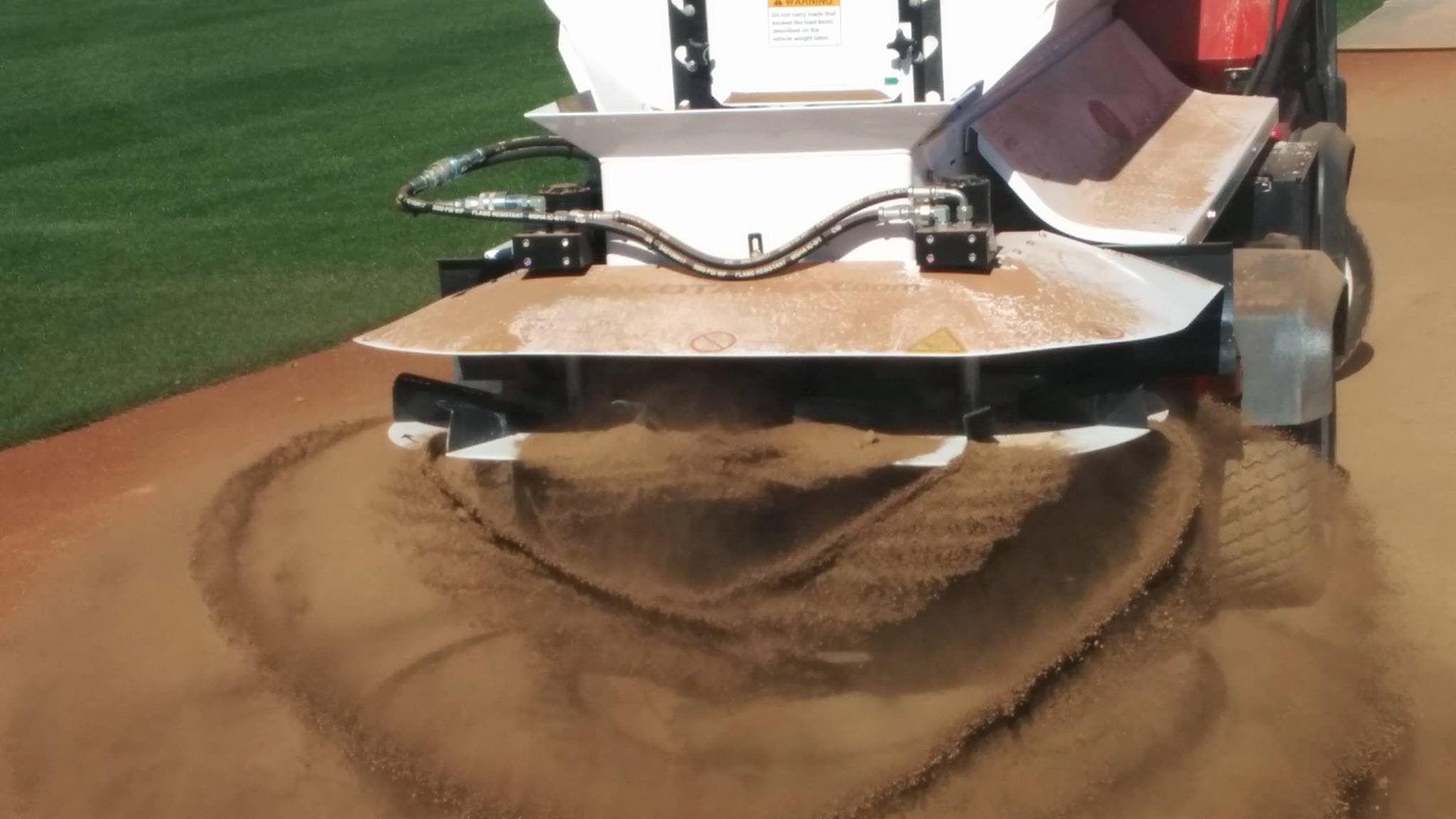
During winter, wind and rain can carry infield topdressing into your grass edges, creating new lips. Professional grounds crews may have the equipment to sweep it back, but most schools, parks, and recreational fields do not. To prevent material loss, install erosion-control barriers such as silt fencing, wattles, or even hoses laid along the edge. The goal is to keep your topdressing where it belongs—on the infield skin.
4. Relevel Low Areas and Improve Soil Performance
Over the season, low spots form on almost every infield. Fall is the time to relevel and ensure proper surface drainage. This is also your chance to evaluate how your infield soil mix is performing. If it’s too hard, dusty, or holds water poorly, consult with a DuraEdge representative for recommendations on soil amendments. For fields with major grading issues, bring in a contractor to laser grade the infield for precise slope correction.
5. Restore the Home Plate and Pitcher’s Mound
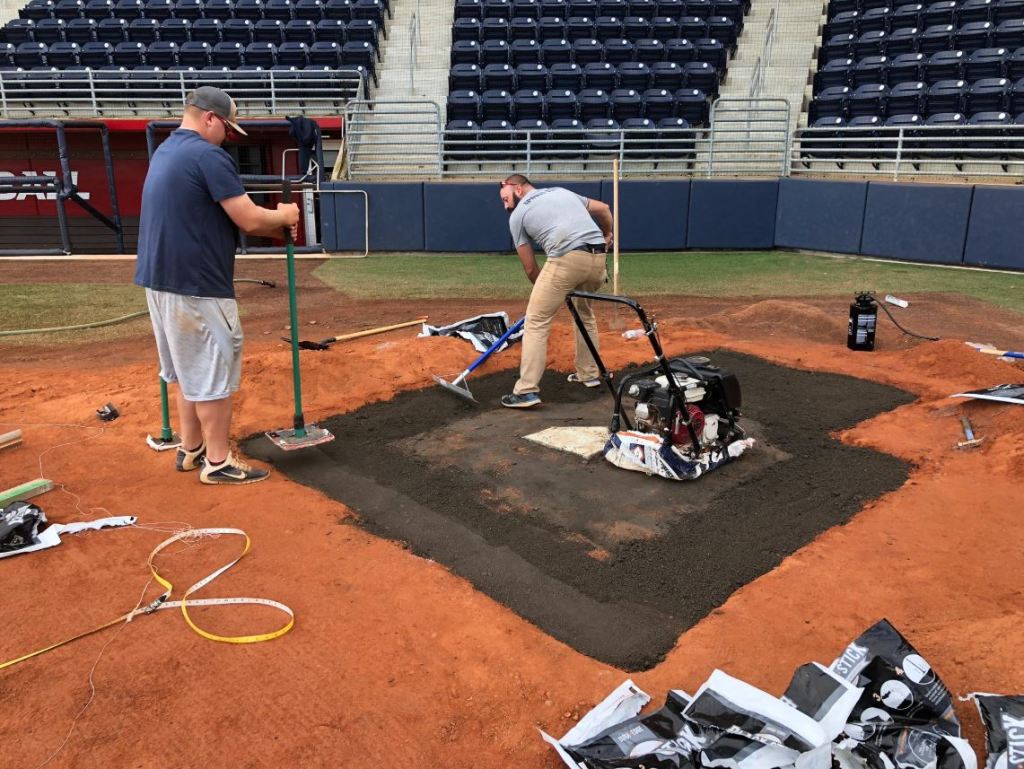
High-wear areas like the mound and home plate need extra attention. Remove all topdressing—it’s often contaminated with clay—and rebuild these areas to grade. Replace the pitching rubber or plate if needed. After repairs, roll surfaces firm, then tarp and secure the mound to prevent erosion. Some groundskeepers prefer to leave the plate uncovered in winter to allow full soil rehydration.
Plan Ahead for Contractors
Some of these projects may require professional field contractors. If so, schedule them early in the summer. By fall, most are booked solid, and in colder regions, rapidly advancing weather shortens the window for field work.\
Conclusion
By following these 5 essential infield maintenance tips, you’ll protect your baseball and softball fields through the winter and set them up for a smooth, safe, and playable spring season. A little preparation now means less work and fewer headaches when it’s time to take the field again.
More Information
Ready to get started on your field renovation? Reach out to us here:
 The DuraEdge Blog